
Full-Stack Development / Field notes
Hiring a Full-Stack Developer in Manchester: A Practical Guide
A practical guide to what a full-stack developer actually does, when you need one, and how to choose the right approach for your website, app or digital product.
If you are looking for a full-stack developer in Manchester, there is a good chance you have a project that needs more than a polished homepage. Perhaps customers need to book, pay or sign in. Perhaps a new app has to share data with your website, or a set of manual tasks is slowing the business down.
The phrase “full-stack” gets used loosely, so it helps to look past job titles and ask a more useful question: can the person understand and build the whole system your idea depends on?
What a full-stack developer does
A full-stack developer works across the connected parts of a digital product. Depending on the project, that can include:
- The interface: the pages and interactions people use, often built with React or Next.js.
- The application logic: accounts, permissions, bookings, payments and the rules that keep them consistent.
- The data: how information is stored, retrieved and protected, using a database such as PostgreSQL or MySQL.
- The integrations: connections to services like Stripe, maps, email platforms, analytics or an existing CRM.
- The release: getting the product online, checking the important journeys and making it possible to improve safely.
Not every project needs every layer. A simple brochure website may be better served by a website builder or a focused design-and-build engagement. The value of full-stack work is being able to make the parts fit together when the project has real behaviour behind the screens.
When a website builder stops being enough
A template can be an excellent choice when the goal is to explain a service and make it easy to get in touch. Custom development becomes more useful when the product needs things such as:
- Private accounts, different user roles or information that must not be visible to everyone.
- Bookings or payments that depend on live availability, capacity or order status.
- A website and mobile app using the same customer, booking or product data.
- Connections to tools your team already relies on, without copying information by hand.
- AI features that need to work with your own documents or business data, with sensible boundaries around what they can answer.
These are not automatic reasons to build something custom. They are signals to map the workflow first and compare the cost of a tailored system with the limits and ongoing fees of existing tools.
Two projects, two very different levels of complexity
The right solution is shaped by the problem, not by how fashionable the technology sounds.
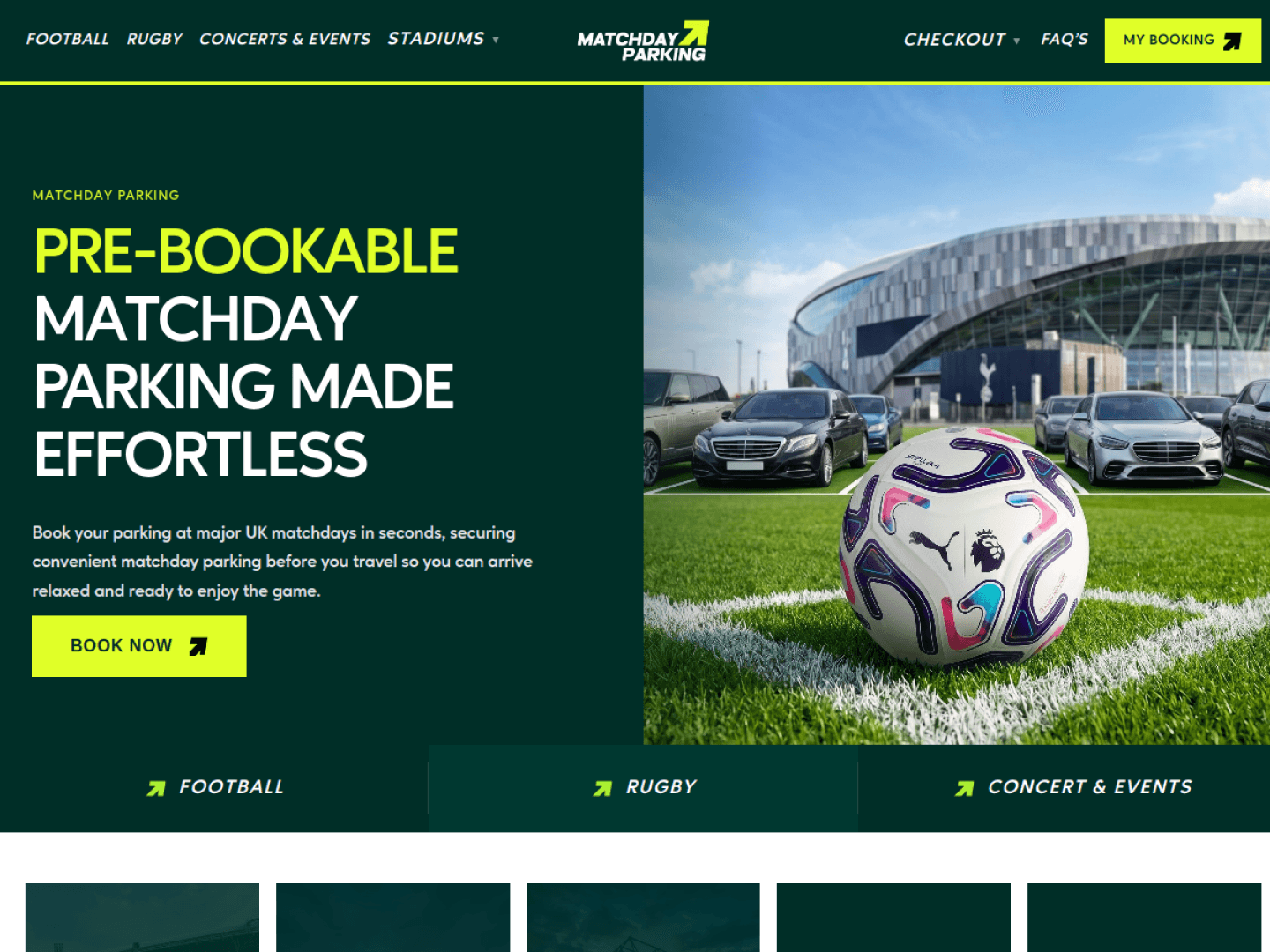
The Matchday Parking platform helps fans find and book parking around major football and rugby events. It has processed more than £1 million in turnover. Supporting that experience meant joining up event-specific availability, online payments and a companion scanner app for staff at the gate. A failure in one part could affect both a customer's booking and the team's ability to manage arrivals, so the pieces had to work as one system.
By contrast, MWFitnessUK needed a clear website and a straightforward route from discovering personal training to making an enquiry or booking. It did not need the same inventory and operations machinery. Keeping that solution focused was part of making it useful.
Those examples are a reminder to start with the customer journey and operational reality. A small, well-chosen system is often better than a large build packed with features nobody needs.
What a good project process looks like
Before choosing a framework, get clear on what should change for the business and for its customers. A practical project usually moves through four stages:
- Define the outcome. Who is the product for, what are they trying to do, and what would a successful result look like?
- Map the workflow. Identify the key screens, data, decisions, integrations and exceptions. Include what staff need to do, not only what customers see.
- Choose a proportionate first release. Separate essentials from later ideas, then select tools that suit the real requirements and the people who will maintain them.
- Build, test and learn. Check the important journeys with realistic data, launch carefully and use feedback to guide the next improvement.
This is where a local conversation can help: workshops are easier when people can get in a room. But location is only one factor. Clear communication, visible decisions and a sensible delivery process matter whether your developer is in Manchester or working remotely.
Choosing the right technology
There is no universal “best stack”. The sensible choice depends on the product, the team and the constraints:
| Project need | Possible approach | What matters most |
|---|---|---|
| Informational or service website | WordPress or Next.js | Easy updates, performance and a clear route to contact |
| Online payments | Hosted checkout or a tailored Stripe integration | Reliable payment status and a simple customer journey |
| Booking or SaaS product | An application framework with a relational database | Availability, permissions and maintainable business rules |
| Website and mobile app sharing data | A shared API and data model | Consistency across devices and a clear ownership model |
| AI over business information | Retrieval from approved sources plus an AI model | Relevant answers, privacy and a way to handle uncertainty |
Treat these as starting points, not prescriptions. A developer should be able to explain why a choice fits your project and what it means for cost, delivery and future changes.
Questions to ask before you hire
You do not need a technical specification before starting a conversation. Bring the problem, the people affected and any tools you already use. Useful questions include:
- How would you find out whether this should be custom-built or handled by an existing product?
- What would you include in the first release, and what would you deliberately leave out?
- How will we test payments, permissions, integrations and less common cases?
- Who owns the source code, hosting accounts and third-party subscriptions?
- What support is available after launch, and how will future changes be estimated?
Good answers should make the trade-offs clearer, not bury you in jargon. Be cautious of a fixed price offered before anyone understands the workflows, integrations or scope. A useful estimate follows discovery; otherwise it is guesswork.
The short version
A full-stack developer can be a strong fit when your website or app depends on connected data, business rules and integrations. For a simple site, a smaller solution may be quicker and cheaper. The best first step is to describe what is difficult today and what you want to be possible next; the technology can follow from that.
If you are weighing up a website, an app, an AI feature or a system that needs to connect to the tools you already run, start with the project brief. You do not need to arrive with the technical plan already worked out.
Frequently asked questions
What is the difference between a web designer and a full-stack developer?
A web designer focuses on how an experience looks and feels. A full-stack developer can also build the application logic, data layer and integrations behind it. Some people do both; for a static site, a designer or site builder may be all you need.
How much does it cost to hire a full-stack developer in Manchester?
It depends on what has to be built, which systems it connects to and what already exists. A focused booking journey is a different project from a multi-user platform with live availability and staff tools. Scope the workflows first, then ask for an estimate with its assumptions made explicit.
Can one developer build a website and app that share data?
Yes. A website and mobile app can use the same backend and data model, so accounts, bookings or inventory stay consistent. The right design depends on what each experience needs and how the system will be operated.
Do I need a technical plan before contacting a developer?
No. It is enough to explain the problem, who it affects and what a better outcome would be. A good discovery conversation can turn that into priorities, a delivery plan and technical options.